Why Usage-Based Pricing Beats a Flat SaaS Fee for Seasonal COD Sellers
Flat SaaS pricing assumes steady volume. Pakistani COD e-commerce doesn't work that way — here's why usage-based pricing fits better.

Umair
Founder @ ClicknShip.app | Helping eCommerce businesses reduce RTO, automate fulfillment, and improve operational efficiency
A flat monthly OMS fee is easy to budget for and easy to sell — but it assumes your order volume is roughly steady month to month. Pakistani COD e-commerce, outside a handful of large sellers, is seasonal: Ramadan, back-to-school, winter clothing, flash sales. A flat fee sized for your busiest month still gets charged in full during your quietest one.
Why flat monthly pricing assumes a volume curve COD stores don't have
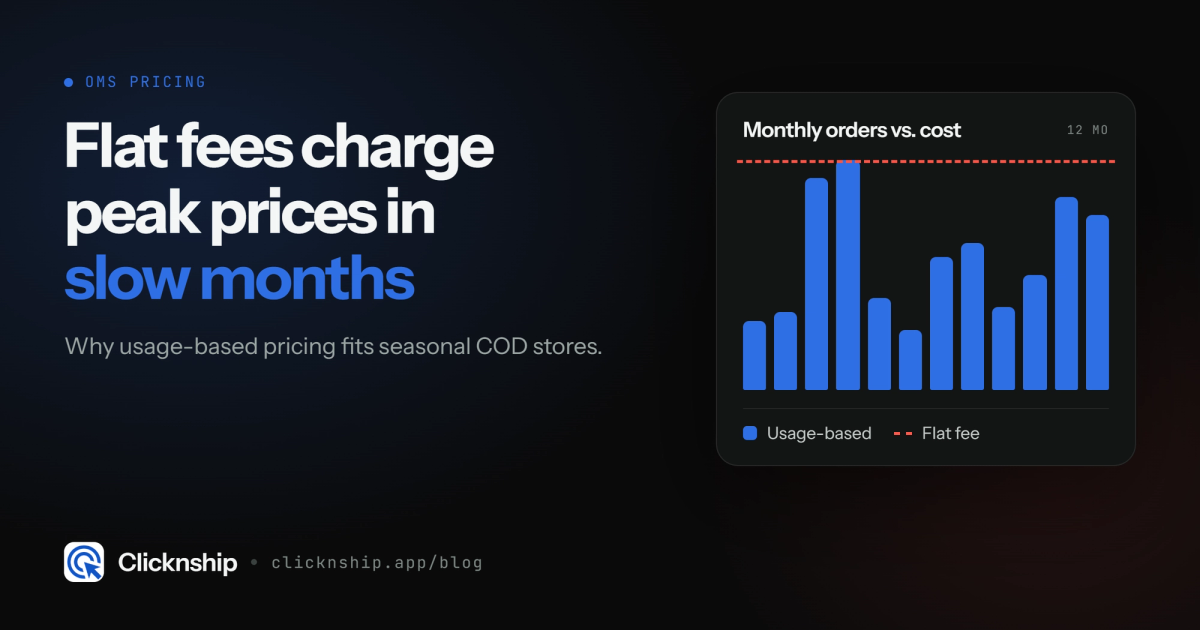
Flat SaaS pricing works well when usage is predictable and roughly constant — think a CRM seat count that doesn't change week to week. Order volume for a seasonal COD store can swing three or four times between a slow month and a peak one. A pricing model built for steady usage charges the same amount regardless of which month you're in, which means the plan is effectively priced for your peak and wasted during everything else.
What usage-based pricing actually protects you from
Paying full platform cost during a slow month when order volume might be a third of peak. It aligns cost with the orders actually processed instead of a seat or tier count that doesn't reflect what the business is doing that month — which matters most for stores that are still growing and don't yet have a stable volume baseline to price a flat plan against.
The trade-off: when a flat fee is genuinely cheaper
If your volume is already high and consistently so, a flat fee at a high-enough tier can work out cheaper per order than a strictly usage-based model. Usage-based pricing wins specifically when volume is inconsistent or still growing — not universally. Worth doing the actual math against your own numbers rather than assuming one model is always better.
Questions to ask before comparing two pricing models
- What does the platform charge during a month where your order volume drops by half?
- Is the usage metric orders, confirmed shipments, or something else — and does that actually match what costs you money?
- Are there hidden minimums that make "usage-based" pricing behave like a flat fee anyway?
- Does the pricing model change if you add more sales channels, or just scale with more orders?
ClickNShip charges based on usage specifically because COD order volume in Pakistan is seasonal, not steady — a slow month shouldn't carry a full platform fee.
FAQ
Isn't usage-based pricing unpredictable for budgeting?
It's unpredictable as a fixed line item, but it's actually more predictable as a percentage of revenue, since cost tracks order volume rather than staying fixed regardless of a slow month.
How do I know if my store would save money on usage-based pricing?
Compare your lowest and highest order-volume months over the past year. The bigger that gap, the more a flat fee is overcharging you in your slow months.
Do usage-based platforms ever have hidden costs that offset the benefit?
Sometimes — check for per-channel add-on fees or minimum monthly charges that effectively recreate a flat fee. Ask for the actual bill at both your highest and lowest volume months before comparing two platforms.
Want to see what usage-based pricing would actually cost for your own order volume? Start with ClickNShip.